
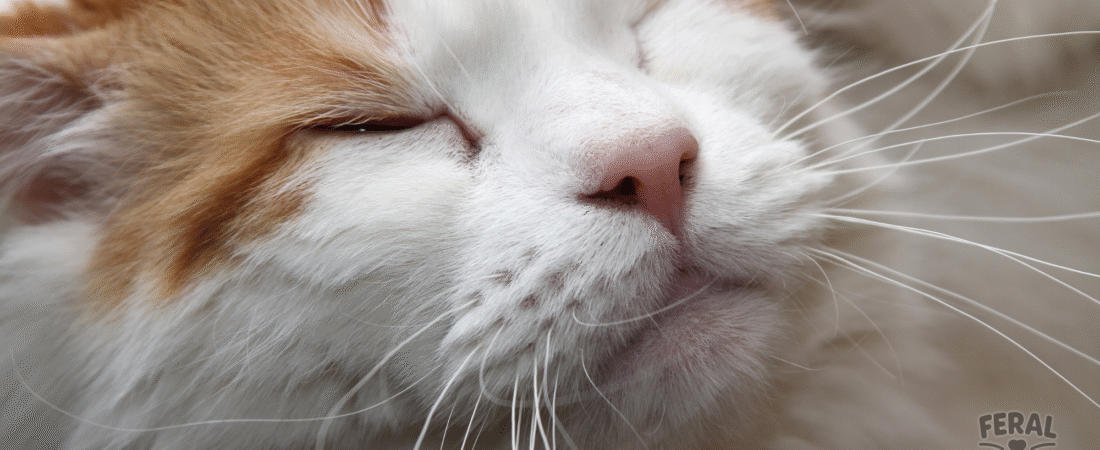
📌 Cats “Speak” With Their Eyes
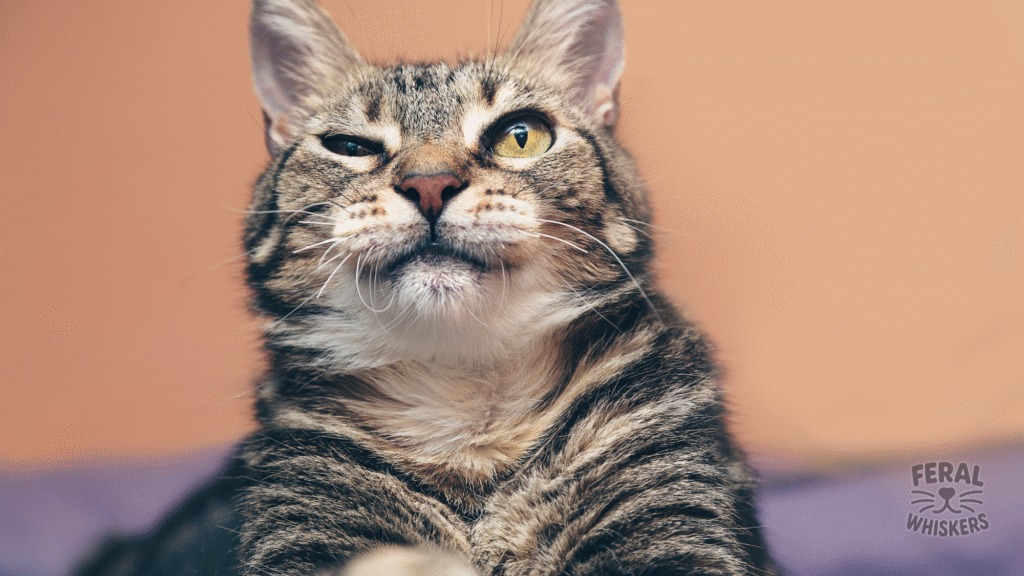
A cat’s eyes are more than just beautiful — they are windows into mood and intent.
From the eerie unblinking stare to the soft, dreamy slow blink, your cat’s eyes constantly signal how they’re feeling.
👉 Unlike dogs, cats are subtler communicators. Their eye language mixes instinct, emotion, and even affection.
🦠 Common Cat Eye Signals & What They Mean
1. The Slow Blink (a.k.a. The Cat Kiss) 💤
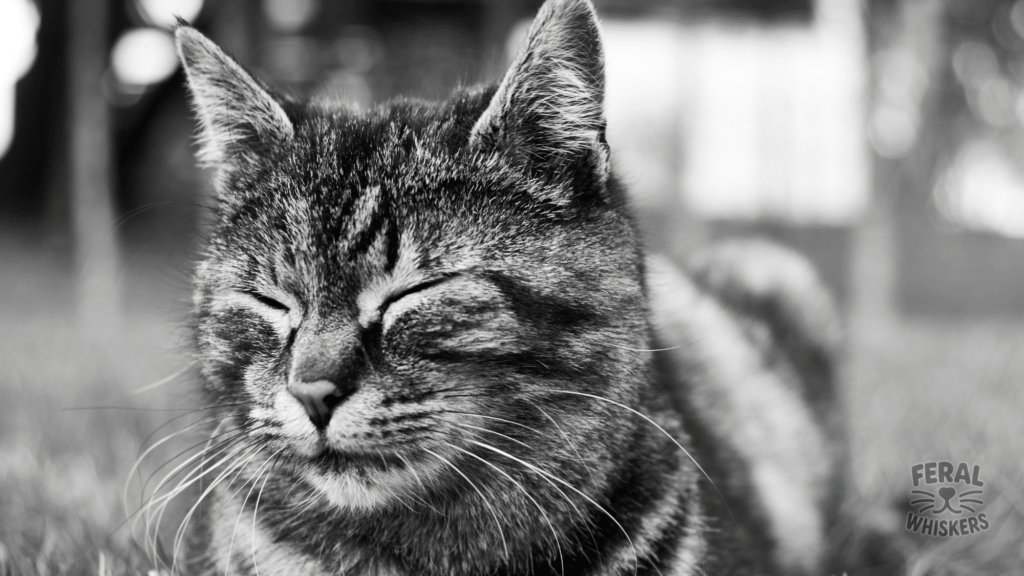
- Meaning: Relaxation, affection, and trust.
- Context: When a cat narrows its eyes and gives you a long, languid blink, it’s essentially telling you: “I love you. I feel safe.”
- Human tip: You can slow blink back — many cats respond with their own blink, creating a silent bonding ritual.
2. Wide Eyes with Dilated Pupils 🌌
- Meaning: High arousal — could be excitement, playfulness, fear, or aggression.
- Context:
- During play: they’re energized, ready to pounce.
- During fear: often combined with crouched body language, dilated pupils help collect more light for survival.
3. Narrow, Slit-Like Pupils 🐍
- Meaning: Focus, defensiveness, agitation, or aggression.
- Context: If paired with flattened ears or lashing tail, it signals irritation. If the body is relaxed, it may just mean strong focus, like while hunting.
4. The Long, Unblinking Stare 👀
- Meaning: Intensity, control, or hunting mode.
- Context: Cats stare to assert dominance, monitor prey, or get your attention.
- Interpretation: Gentle stare + relaxed body = curiosity. Hard stare + tense posture = aggression or challenge.
5. Half-Closed Drowsy Eyes 😌
- Meaning: Trust and deep comfort.
- Context: Cats often lie in sunbeams, resting with heavy eyelids. In this vulnerable state, they feel no threat.
6. Third Eyelid Showing (that white inner film) ⚠️
- Meaning: Illness, injury, or exhaustion.
- Context: If a cat’s inner eyelid is frequently visible, it could signal infection, dehydration, or other health concerns → vet check needed.
🚨 When Eye Language Signals Trouble
- Constant squinting or pawing at eye: Could signal injury, infection, or irritation.
- Sudden dilation in one eye only: Potential neurological issue.
- Glazed or unfocused eyes: May mean illness, poisoning, or disorientation.
👉 Always pair eye cues with body language to understand: dilated pupils + playful crouch = fun; dilated pupils + hissing = fear/aggression.
🌿 How to Use Eye Contact With Your Cat
- Bond with slow blinks: Quietly blink at your cat to reinforce trust.
- Avoid hard staring: Direct, unblinking eye contact can feel confrontational (like predatory behavior).
- Observe the pupils: Track whether your cat is calm, playful, or stressed.
- Use context: Always read alongside ears, body posture, and tail for the “full sentence” of cat communication.
❓ FAQs
Q1: Why does my cat stare at me while I eat or sleep?
They’re curious, waiting for food, or simply keeping tabs on their favorite human. Staring = attention tool.
Q2: Why do my cat’s eyes get huge during play?
Dilated pupils are part of the adrenaline rush of hunting play — it’s excitement, not fear.
Q3: Is the slow blink really a sign of love?
Yes ❤️. Feline behaviorists widely recognize it as a non-verbal “I trust you” gesture.
Q4: Should I stare back at my cat?
Not for long. Instead, use slow blinks and soft glances. Hard stares can feel threatening.
💡 Final Thoughts
Your cat’s eyes are storytellers of mood and trust. From the loving slow blink to the hunting glare, they reveal emotions we can learn to interpret with practice.
✅ Key takeaway: Watch the pupils, lids, and gazes carefully — and return the slow blink to answer with love in their own language.